AI Project Intelligence Control Panel
An internal AI ops system that turns hundreds of scattered projects, deployments, and GitHub repositories into a searchable, classified, prioritized, and actionable decision board.
Role
AI Workflow Strategy / Automation / Internal Systems
Timeline
May 2026
Status
Internal AI Ops System
Proof
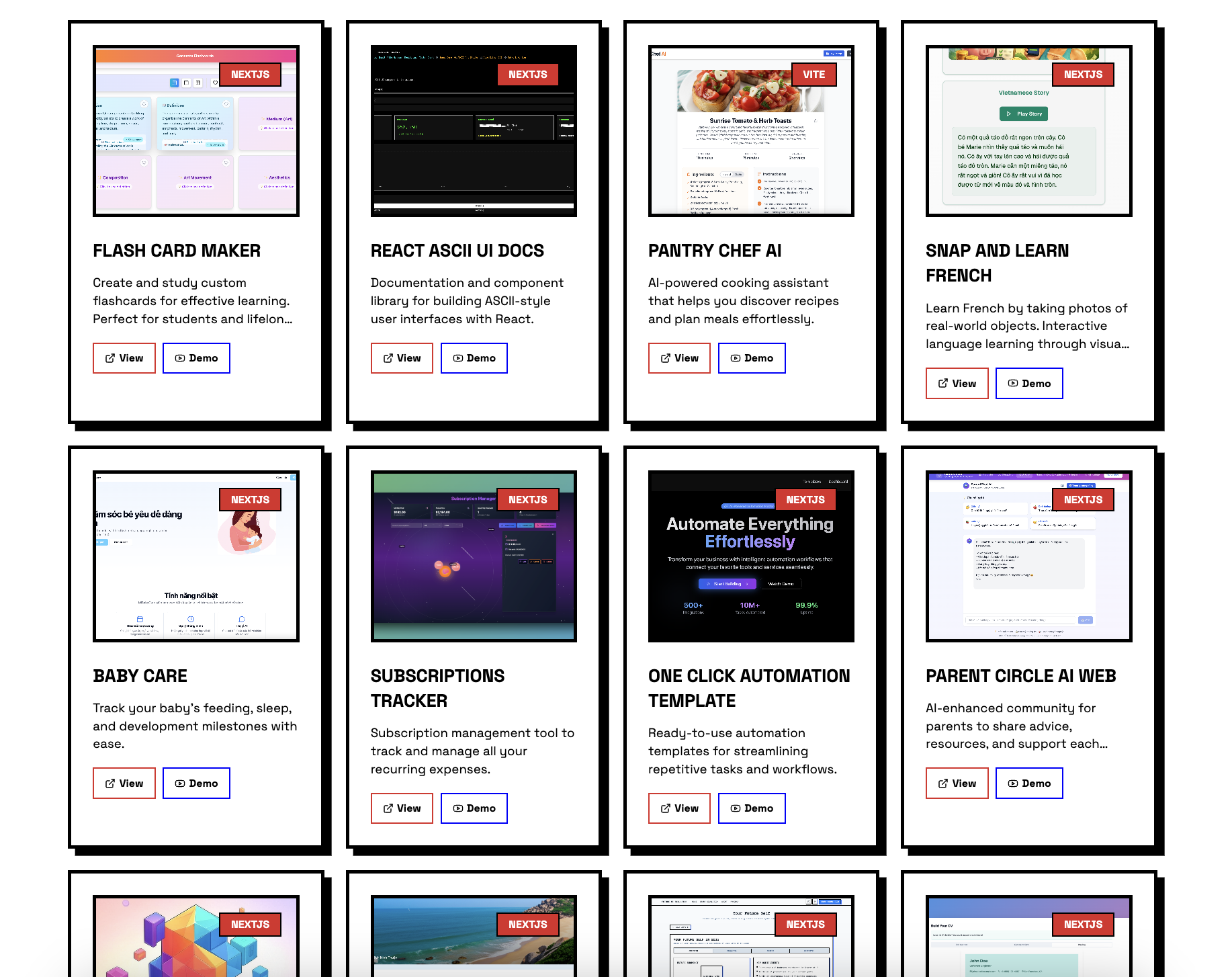
Mapped 443 local candidates, 137 Vercel projects and 457 GitHub remotes into a decision board
What Needed To Change
As the number of projects, prototypes, demos, client builds, and experiments grew, managing them through memory, local folders, or manual lists stopped being enough. Assets were scattered across local machines, Vercel deployments, GitHub remotes, and separate notes. The real problem was not only volume. The bigger issue was the lack of a system that could answer the important questions: which projects should go public, which should become case studies, which prove AI or automation capability, which deserve polish for service sales, and which should be archived to reduce noise. Mikel Studio built this as an internal AI ops case study: using automation, data mapping, and AI-assisted classification to turn a scattered portfolio into a decision-support control panel. It reflects the same kind of operational problem many founders, agencies, and teams face when data, tools, files, and workflows grow faster than their operating system.
What We Built
- Built a local project scanner to read, gather, and classify project candidates across multiple folders.
- Inventoried Vercel deployments to check status, visibility, public URLs, and proof potential.
- Mapped GitHub remotes from local repositories to identify which projects had repos, which were deployed, and which remained experiments.
- Created a master project table with metadata, status, decision, review flag, next action, and priority for each asset.
- Designed a ranking model to score projects by fit for flagship case studies, service proof, lab experiments, or archive decisions.
- Applied an AI-assisted workflow to classify, summarize, tag, and turn scattered technical data into an actionable decision board.
- Created a reusable framework for similar use cases: asset inventory, workflow audit, internal dashboard, AI ops system, and consulting discovery.
Outcome
The system turned a scattered project library into an AI-assisted control panel. Instead of manually remembering where each project lived, which ones were deployed, which ones had repos, and which ones were worth making public, the assets were organized into a shared operating system. The result is a decision board that helps Mikel Studio choose flagship case studies, identify the right proof for sales conversations, prioritize the next sprint, and archive assets that no longer create value. More importantly, the case demonstrates how Mikel Studio approaches AI-first consulting and automation problems: start with scattered data, map the existing system, define decision criteria, automate collection and classification, then build a dashboard that helps the team act with more clarity. The same pattern can apply to project operations, content operations, sales asset management, internal tools, and founder or agency operating systems.
Stack
Want to build a similar system?
Bring the problem and the assets you already have. We will audit them together and find the next clear step.